
Conure Care Guide
Reviewed by Hamza, Avian Care Lead at Dubai Birds since 2018
Diet, housing, training, and UAE-specific care for the world's most playful mid-sized parrots.
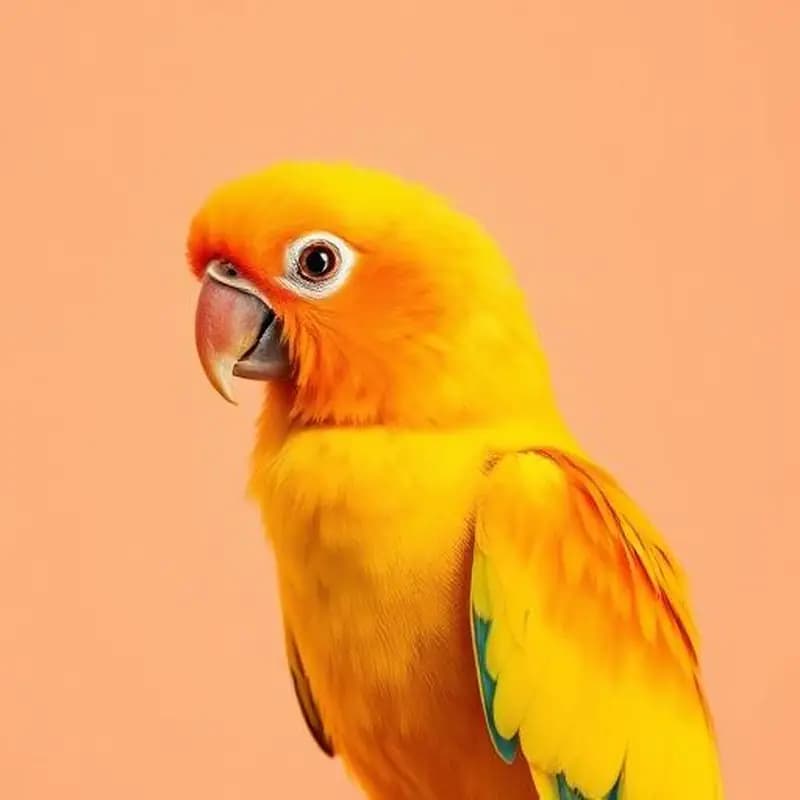
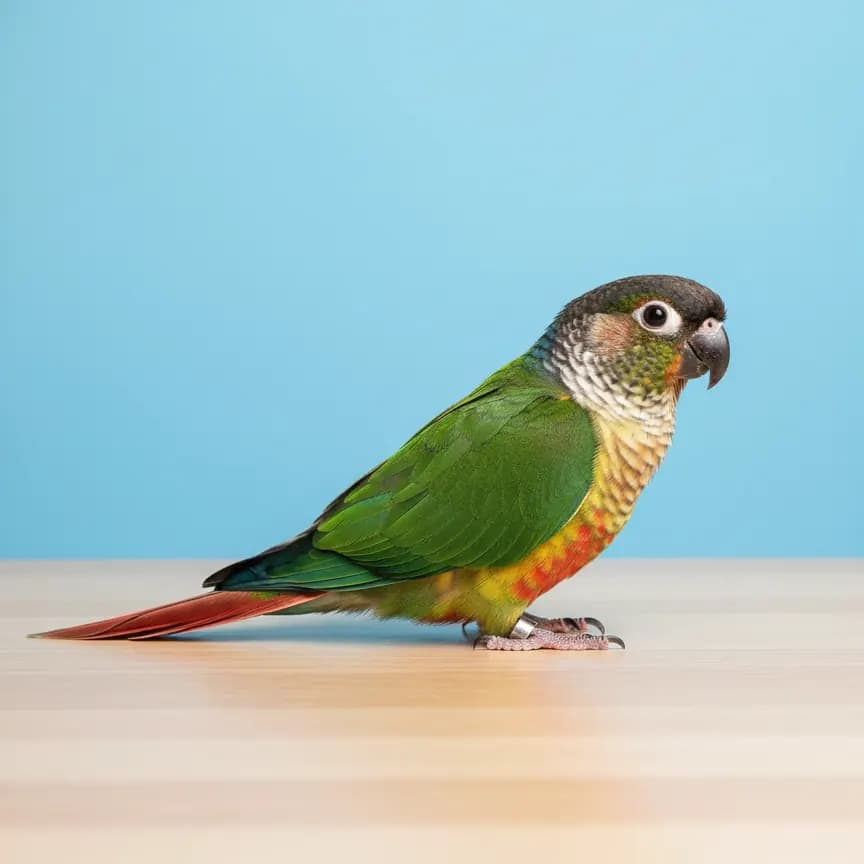
Conures are the most popular mid-sized parrots in the UAE. They combine playful temperament, manageable size, strong bonding capacity, and prices that fit a wider range of buyers than macaws or African Greys. The trade-off is volume, Sun and Jenday conures are loud enough to draw apartment complaints. This guide covers Sun, Jenday, Green Cheek, Pineapple Green Cheek, Cinnamon Green Cheek, Yellow-Sided Green Cheek, Turquoise Green Cheek, and other conure mutations we sell at Dubai Birds.
Native habitat and origin
Conures are native to Central and South America. They live in flocks of 20-100 birds in dry forest, savannah, and forest-edge habitat across Brazil, Bolivia, Paraguay, Argentina, Venezuela, Guyana, and Mexico.
Main species at Dubai Birds:
For population status see BirdLife International.
Lifespan, size, weight
Sexual maturity is 1-2 years for Green Cheeks and 2-3 years for Sun and Jenday conures.
Intelligence, talkability, vocalisation
Conures are intelligent, curious, and highly playful. Most learn 5-25 words. Talking is not a strong suit, conures "talk" with body language and contact calls more than with mimicry. Sun and Jenday conures occasionally develop clear phrases; Green Cheeks are softer talkers but more nuanced communicators.
Noise level
For JLT, Marina, Downtown, or Business Bay apartments, only Green Cheek conures and their mutations are realistic. Sun and Jenday conures need a villa setting in Mirdif, Al Barsha, or one of the standalone-villa neighbourhoods of Sharjah and Ajman.
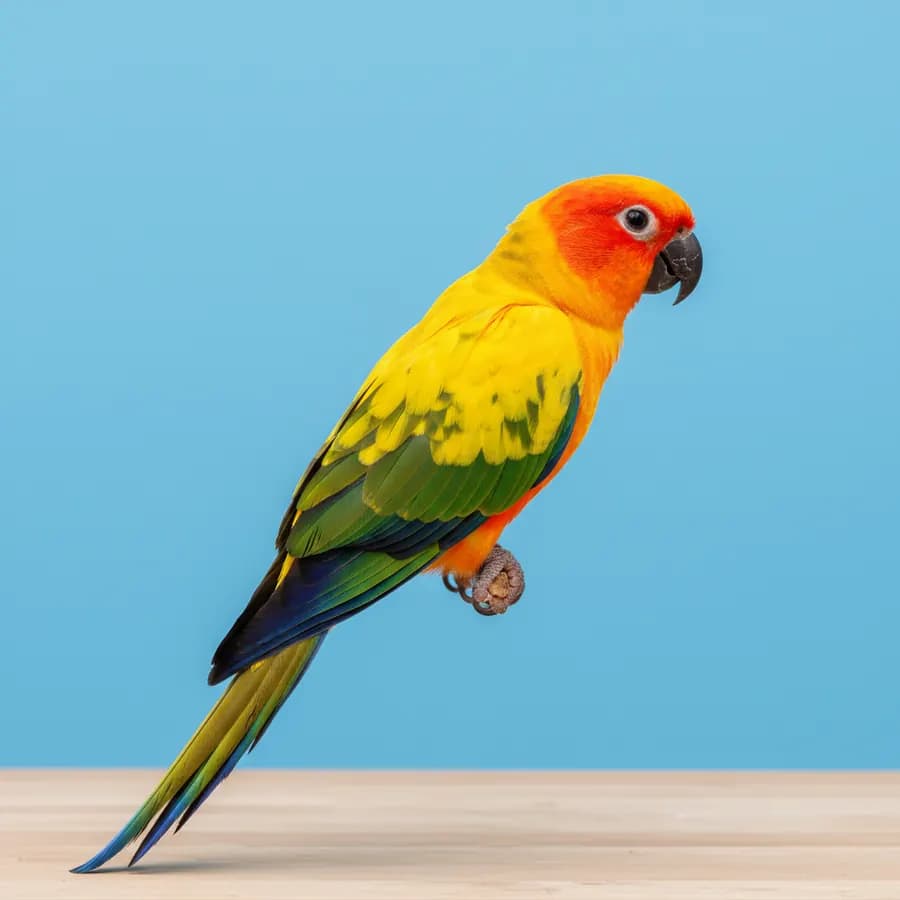
Diet, UAE-specific
Conures fatten quickly on seed. Sunflower-heavy mixes cause fatty liver disease within 2-3 years.
Daily plate (Green Cheek, ~70 g)
Daily plate (Sun / Jenday Conure, ~120 g)
Same proportions, scaled up to roughly 35-45 g of total food per day.
UAE-specific calcium and Vitamin A sourcing
UAE summer (May-September) protocol
Foods to avoid
Avocado, chocolate, caffeine, alcohol, onion, garlic, raw mushroom, raw potato, salt, sugar, fried food, dairy. Apple seeds, cherry pits, peach pits. No food prepared in PTFE non-stick cookware.
Housing in UAE climate
Cage requirements
Powder-coated steel or stainless steel only. No zinc-plated cages, toxic to all parrots. Solid latches because conures are escape artists.
Climate setup
Daily routine and enrichment
Conures need 2-4 hours of out-of-cage time and at least 1 hour of direct human attention.
Rotate at least 6 toys weekly. Foraging puzzles, shreddable paper, untreated softwood, leather strips, foot toys. Conures are notorious for cuddling under blankets and inside shirt sleeves, supervise strictly because suffocation accidents happen with unsupervised burrowing.
Common health issues
For symptom recognition see Lafeber Vet and VCA Animal Hospitals.
Where to buy in UAE
Mandatory paperwork
Dubizzle and Instagram resellers regularly list conures without paperwork. Avoid these, undocumented birds in the UAE are subject to confiscation under MOCCAE regulations.
Hand-raised vs imported
UAE-bred conures dominate the local market because Green Cheeks breed reliably in captivity. Hand-raised UAE Green Cheeks adapt to a new home in 1-2 weeks. Sun and Jenday conures are more often imported and need 4-6 weeks of acclimatisation.
AED price ranges in 2026
Live prices today at Dubai Birds:
Live availability is on the Conures collection page.
What this means for you as an owner
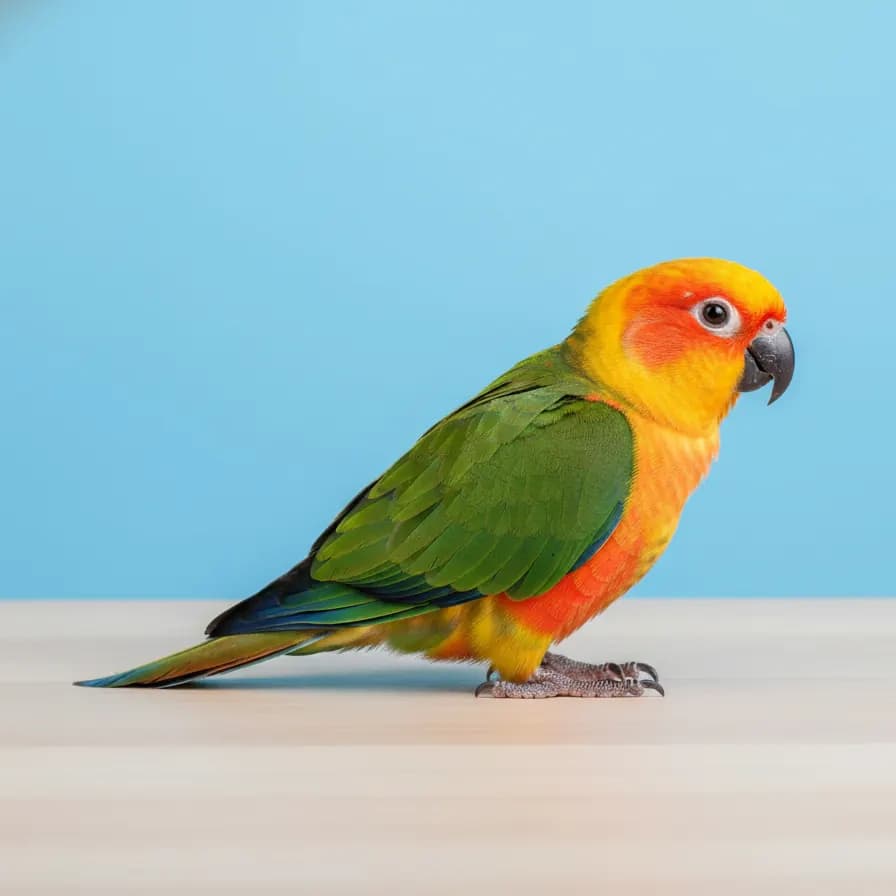
Conures are parrots, so they come from large social flocks, and play is common in parrots. That fits what owners see: a conure that wants company and something to do. Many birds also fear new objects, which is why a conure may scream at a toy it will love next week. Conures have not been well studied for intelligence, and researchers still debate how to interpret many findings. Our guides on positive reinforcement training and on introducing new toys and foods give practical steps for both.
Reviewed by
Reviewed by Hamza, Avian Care Lead at Dubai Birds since 2018.
Frequently asked questions
See the FAQ block below.