
How to Train a Parrot
Reviewed by Hamza, Avian Care Lead at Dubai Birds since 2018
Trust building, core cues, talking, and UAE-specific training for any parrot from a budgie to a Hyacinth Macaw.
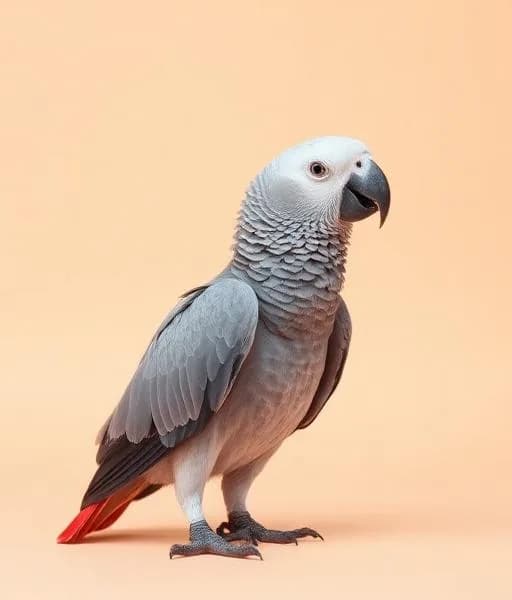
A trained parrot is a safer, healthier, happier parrot. An untrained parrot bites, screams, plucks, and gets rehomed. At Dubai Birds we hand every buyer the same training framework whether they leave with a 30-gram budgie or a 1.5-kilogram Hyacinth Macaw. The mechanics scale. This guide is the full version, built for UAE apartments, UAE summers, and UAE neighbours.
Why training matters
Training is not a luxury or a party trick. It is the single biggest predictor of a parrot's lifetime welfare. Three reasons:
Building trust before the first cue
No cue works on a frightened bird. Trust is the prerequisite, not the reward.
The first 14 days
Best time of day in the UAE
Parrots are diurnal and most receptive in the first 2 hours after waking and the last 2 hours before sundown. In Dubai that translates to:
Midday sessions in summer fail because the bird is in heat-conservation mode. Train in the cooler, indoor-AC slots only.
Core cues every parrot needs
These five cues are the foundation. Every species we sell at Dubai Birds, from a 50-gram cockatiel to a Hyacinth Macaw, should know them inside 8 weeks.
1. Step-up
Present your index finger (small parrots) or forearm (medium and large parrots) just above and in front of the bird's feet, slightly pressed into the lower belly. Say "step up" once. The instant the bird shifts weight forward, mark and reward (see markers below). For nervous birds, start with a perch held in the hand instead of bare skin. Most parrots learn step-up in 3-10 sessions.
2. Step-down
Mirror image. Lower your hand to a perch or play-stand at chest height. Say "step down" once. Reward as soon as the bird transfers both feet. Step-down is what stops shoulder-glued birds from refusing to leave you. Train it in week 1.
3. Station
A station is a designated "stay here" perch. Carry the bird to a play-stand, T-perch, or training table. Reward immediately on contact. Walk one step away. Return and reward if the bird stayed. Build duration in 5-second increments. A solid station makes guest visits, vet exams, and feeding-time chaos manageable.
4. Recall
From the station, with the bird hungry and motivated, say "come" and offer a treat at hand-distance. As the bird steps onto the hand, mark and pay. Build distance: 30 cm, 1 metre, across the room, between rooms. A flighted parrot that recalls reliably is safer in a 70 m² apartment than a clipped parrot that does not.
5. Target training
A target stick, a chopstick, a wooden dowel, even a takeaway spoon, is the most under-rated training tool in parrot work. Touch the stick to the bird's beak. The instant the bird touches back, mark and reward. Within 5 sessions you can move the bird around a room, into a carrier, onto a scale, or off a forbidden ledge by simply pointing the stick. Target-trained birds are easier to vet, easier to weigh, and easier to evacuate.
Positive reinforcement mechanics
Markers
A marker is a sound or word that means "that, yes, that exact behaviour, earns a treat." The marker has to fire within 0.5 seconds of the correct action. Two options:
Pair the marker with a treat 20-30 times in the first session before you ever ask for a behaviour. Click, treat. Click, treat. The bird learns the sound predicts food. From session two onward, the marker can be used to capture any small step toward the goal.
Treat hierarchy
Not all treats are equal. Build a hierarchy and use the high-value items only for new or hard behaviours.
All Tier 2-4 treats are easily sourced in UAE: Pet's Delight at Mall of the Emirates and Dubai Hills carries pine nuts, sunflower hearts, and millet sprays. Carrefour, Spinneys and Waitrose stock raw nuts in bulk. DubaiPetFood ships Harrison's, TOPs, and Lafeber's training treats to the door.
Session length and daily count
Total daily training under 45 minutes. Anything more and the bird's food motivation collapses, they are full, you are frustrated, the session ends badly.
Food motivation and weight
Food is a better reward when the bird is a little hungry. A little hungry, never starved. The simple way to manage it is to plan the bird's normal meals around training. Train before breakfast and serve breakfast after. Do an evening session, then serve dinner.
Treats count as food. Whatever the bird earns in a session is part of its total daily diet, so on training days cut back on other rich foods like seeds and fatty nuts. Skip that step and you end up with an overweight bird.
Never starve a bird to make it work. It is unnecessary and it backfires, because a bird that is stressed about food learns badly and trusts you less. Keep an eye on your bird's weight and general condition. If it loses weight or looks unwell, stop training and see an avian vet. Check any change to its diet with an avian vet too.
Talking and mimicry
Which species talk best
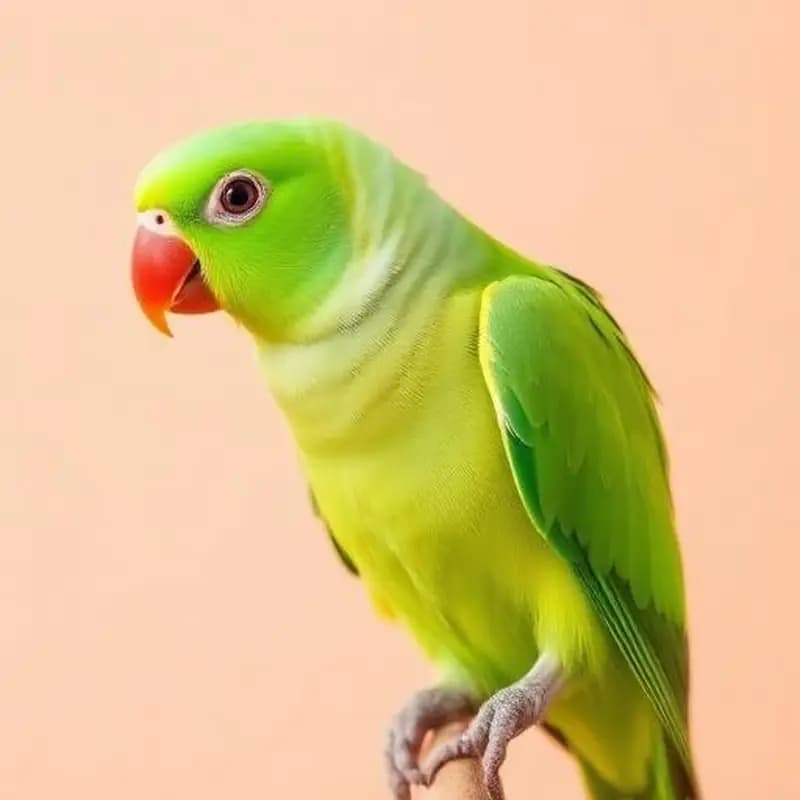
In rough order of clarity and vocabulary in UAE pet households:
Macaws, conures, and lovebirds talk less reliably. Buying a macaw for talking is the wrong reason to buy a macaw.
Common myths
Teaching method
Pick one short, emotionally charged word, "hello," the bird's name, "step up." Say it in the same tone, at the same volume, every time you arrive at or leave the cage. Repeat for 4-8 weeks. The first attempts sound like a kettle. Reward any approximation immediately with attention or a Tier-3 treat. Add the next word only after the first is solid.
Never leave the TV on as a teaching tool. Birds mimic emotion, not background noise.
Trick training progression
Once step-up, station, recall, and target are reliable, layer tricks on top. A logical progression:
Never rush the next trick. A parrot that loses confidence in the basics regresses on everything.
UAE-specific training factors
Apartment noise rules
Dubai Municipality treats sustained residential noise above 45 dB at night and 55 dB during the day as a nuisance. Training reduces nuisance screams in three ways:
Neighbour-friendly species for JLT, Marina, Downtown, Business Bay, or Dubai Hills apartments include budgies, cockatiels, Quakers, conures (with caveats), African Greys, and Senegals. Macaws (except Hahn's) and large cockatoos are villa-only.
Summer heat training schedule
From May to September, ambient outdoor temperatures hit 38-45 °C. Train indoors with AC at 22-26 °C, never on a balcony past 09:00 or before 17:30. Heat stress signs, open-mouth panting, drooping wings held off the body, glazed eyes, mean the session ends now. Move the bird to the coolest room and offer a shallow bath.
Neighbour considerations
If you live in a building with shared walls, train new vocalisations and recall-fly drills before 21:00, and never before 07:00 on weekends. A short, written WhatsApp note to immediate neighbours when you bring a new parrot home prevents 90% of complaints.
Common training problems
Biting
Biting is a communication failure, not aggression. Causes: hand pressure during step-up, hormonal season (4-7 years), territorial cage defence, fear of a new object. Fix: target-train away from the cage, never punish a bite, identify the precursor body language, and back off before the bite happens.
Screaming
Flock contact calls are normal. Persistent attention-seeking screams are learned. Never reinforce by shouting, running over, or covering the cage angrily. Reward quiet behaviour aggressively for 2-3 weeks. Most attention-screams collapse inside a month if every household member is consistent.
Hormonal aggression at 4-7 years
Large parrots reach sexual maturity at 4-7 years. A bird that loves only one human starts viewing every other human as a rival, leading to dive-bombing partners, biting children, and screaming when the favourite person leaves the room. Prevention is multi-handler training from week 1. Treatment is reduced cuddling, no "cave" hiding spots, 12 hours of full darkness, and a stricter daylight schedule.
One-person bonding
If the bird already favours one person, every adult in the home must do all training, all feeding, and all step-up requests for 8-12 weeks. The favourite person handles the bird least during this period. It is hard. It works.
When to hire a professional vs DIY
Most parrots can be trained by their owners using the framework above. Hire a certified avian behaviour consultant when:
Dubai Birds maintains a current list of certified avian behaviour consultants serving the UAE; ask in-store at our Warsan 3 aviary.
What the research suggests
Birds remember more than people expect. Crows remember human faces for up to about 3 years. Scrub jays remember what they hid, where and when, and re-hide food if another bird was watching. Birds mostly find hidden food by remembering locations, not by smell. For a parrot owner, that means your bird may well remember who handled it roughly, where the scary towel lives and what time dinner comes. Routine matters. Researchers still debate how to interpret many of these findings, and most species have not been tested, so treat them as context, not a promise.
The training science is simpler. Birds repeat behaviors that get rewarded, so reward right after the behavior and use a clicker or short word to mark the exact moment. Build new behaviors in small steps. Do not punish, because fear damages trust and slows learning. Keep sessions short and end on a win. Our guide on why positive reinforcement works with birds goes through this in detail, our parrot enrichment and foraging guide covers what to do between sessions, and our guide on whether parrots really talk sets honest expectations for speech.
References and further reading
Reviewed by
Reviewed by Hamza, Avian Care Lead at Dubai Birds since 2018.
Frequently asked questions
See the FAQ block below.