
Why Positive Reinforcement Works with Birds
Reviewed by Hamza, Avian Care Lead at Dubai Birds since 2018
Birds repeat what pays and remember how you treat them. Here is how to use that, and what to teach first.
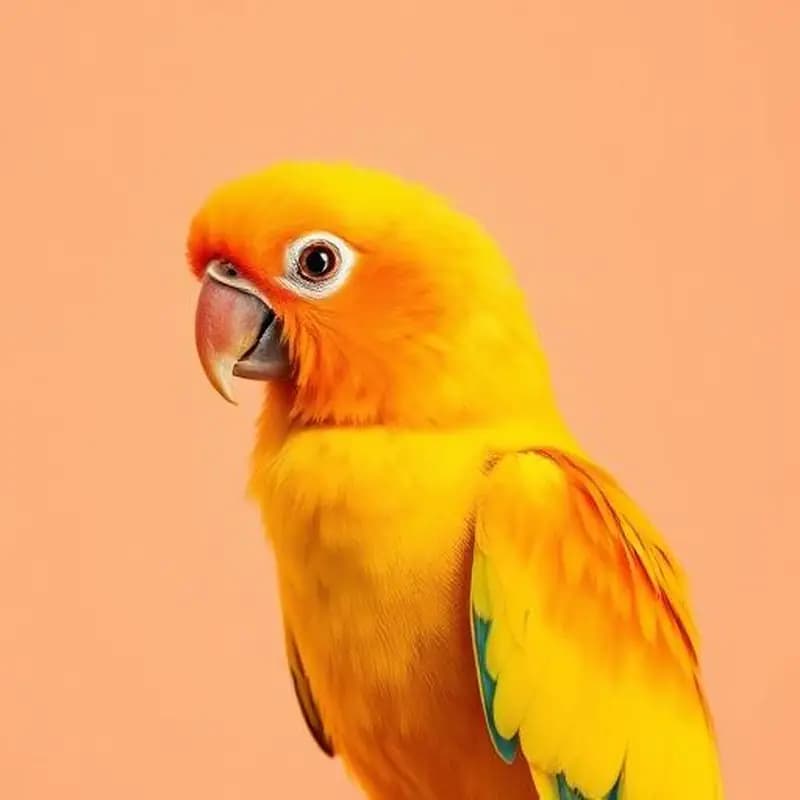
Almost every bird that walks into our aviary has an opinion about hands. Some have learned that hands bring food. Some have learned that hands grab. The training method you pick decides which lesson sticks.
We teach every buyer the same approach: reward what you want, never punish what you don't. This page explains why that works, using what we know about how birds learn and remember, and then walks through the first few things to teach. Our parrot training guide has the full program with markers, treat tiers and talking. This is the short version of the why and the first steps.
Birds repeat what pays
The core idea is simple. Birds repeat behaviors that get rewarded. If stepping onto your finger is followed by a treat, the bird will step up more often. If screaming gets you running into the room, the bird learns that too, which is why timing matters.
The reward has to come right after the behavior. A few seconds late and the bird has already moved on to something else, so it cannot link the treat to what you wanted. That is why trainers use a marker: a clicker, or a short word like "yes", said at the exact moment the bird does the right thing. The marker tells the bird "that one, right there", and then the treat follows.
Birds remember how you treat them
There is a reason we put weight on trust. Birds are good at remembering.
Crows remember individual human faces for up to about three years. Pigeons, which people tend to write off, can remember hundreds of pictures more than two years later. Scrub jays remember what they hid, where and when. These are results from particular species, and parrots may not match them exactly. Researchers still debate how to interpret many of these findings, and most bird species have never been tested. But it is reasonable to assume that a clever pet bird also remembers who was gentle and who was not, and which room is where scary things happen.
If you grab a bird, chase it or shout at it, the bird files that away. If you are patient and predictable, that goes in the file too.
Why we do not punish
Punishment is not part of this approach. Fear damages trust and slows learning. A bird that is afraid of your hand will not step onto it, and a bird that is anxious cannot concentrate on a new task.
In practice, that means:
When a bird bites, the bite is information. Something was too fast, too close or too much. Pause, back off, and ask what led up to it. Then make the next step smaller.
Keep sessions short and end on a win. Even a bird that is not interested in new things today should finish on something it already knows how to do, so the last memory of the session is a good one.
Shape behaviors in small steps
Shaping means rewarding tiny steps toward the thing you really want. You do not wait for the whole behavior to appear. You reward the first lean toward it, then the next, then the next.
Say you want a nervous bird to step onto your hand. You might reward in this order:
Each step is a small win. If the bird stalls, go back to the step before and make it easier. If you ask for too much, it will feel to the bird like a punishment, even if you meant nothing of the kind.
First things to teach
These are the behaviors our trainers start with. They cover what a bird needs for daily life and for emergencies. Our training guide goes into more detail on each one.
Step up
Hold your finger or a perch just above and in front of the bird's feet, say "step up" once, and mark and reward as soon as it moves onto you. If the bird is nervous of hands, use a hand-held perch first. Teach step down as well, so the bird is not stuck on you.
Targeting
Teach the bird to touch its beak to the end of a stick or the tip of a spoon. Mark and reward each touch. Once your bird knows this, you can guide it around the room, onto a scale or into a carrier without ever touching it. This is the single most useful early skill for many owners.
Recall
Start with the bird on a perch or playstand a short distance away and call it to your hand for a treat. Increase the distance a little at a time. Recall is the behavior you will wish you had trained if the bird ever gets out of the house, so build it carefully. A bird does not need to be flighted for you to practice the first stage of it.
Carrier training
Many birds hate the carrier because the only time they see it is before a scary vet visit. Teach the bird to like it instead. Leave the carrier open in the room, toss treats near it, then inside it, then close the door for a second and open it again, adding time slowly. A bird that walks in on its own is far less stressed when it needs to go to the vet or to boarding.
Towel training
A bird may need to be held in a towel for a health check or nail trim. Teach it before you need it. Show the towel, reward calm, touch the bird lightly with it, reward again, and build up slowly. The aim is a bird that tolerates the towel without panic. A towel is a tool for care, never for punishment.
How long and how often
Short and often beats long and rare. A few minutes at a time is enough for most birds, once or twice a day. Stop as soon as the bird loses interest. Pick a time when the bird is awake and alert, not just after a meal or when it is tired.
Use treats the bird really likes and keep the pieces small. Treats should come out of the daily food, not on top of it. If you are unsure how to adjust food portions or change what your bird eats, check with an avian vet first.
What to expect
Some birds pick up step up in a few sessions. Others take weeks of patient work, particularly older birds or birds that arrived with a rough history. Progress is rarely smooth. A bird that did well yesterday may refuse today, and that is normal.
If you get stuck, go back to the last step the bird did happily. Most of the time the problem is that the steps were too big.
Reviewed by
Reviewed by Hamza, Avian Care Lead at Dubai Birds since 2018.
Frequently asked questions
See the FAQ block below.