Reviewed by Hamza, Avian Care Lead at Dubai Birds since 2018
Emotional needs, daily care, and UAE-specific advice for the world's most affectionate parrots.
_Last reviewed: April 2026_
Cockatoos are not parrots in the colloquial sense — they belong to a separate family (Cacatuidae) characterised by movable head crests, white-or-pink plumage, and the highest emotional demand of any companion bird. Owners describe them as toddlers in feathers. They are also the loudest birds in the trade and the most likely to develop self-destructive behaviour when their needs are unmet. This guide is the UAE-specific care brief our team gives every cockatoo buyer at the Warsan 3 aviary.
Native habitat and origin
Cockatoos are native to Australia, Indonesia, the Philippines, Papua New Guinea, and the Solomon Islands. Species we sell at Dubai Birds:
Goffin's Cockatoo — Tanimbar Islands, Indonesia (CITES I).
Galah / Rose-Breasted — across Australia (CITES II).
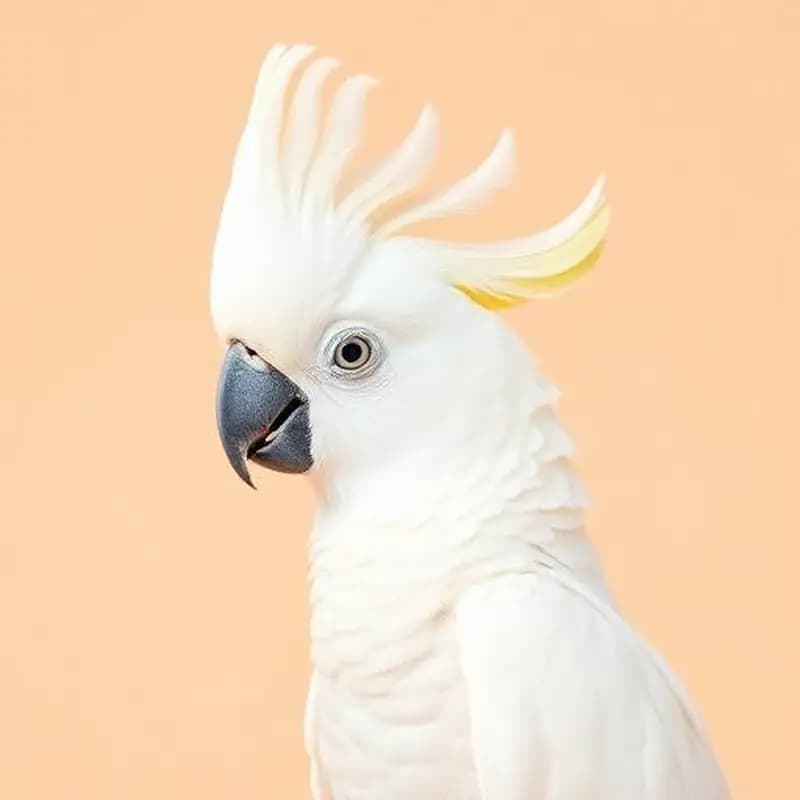
Sulphur-Crested Cockatoo — Australia, Indonesia, New Guinea (CITES II).
Bare-Eyed Cockatoo — northern Australia (CITES II).
Major Mitchell's / Pink Cockatoo — Australia (CITES II).
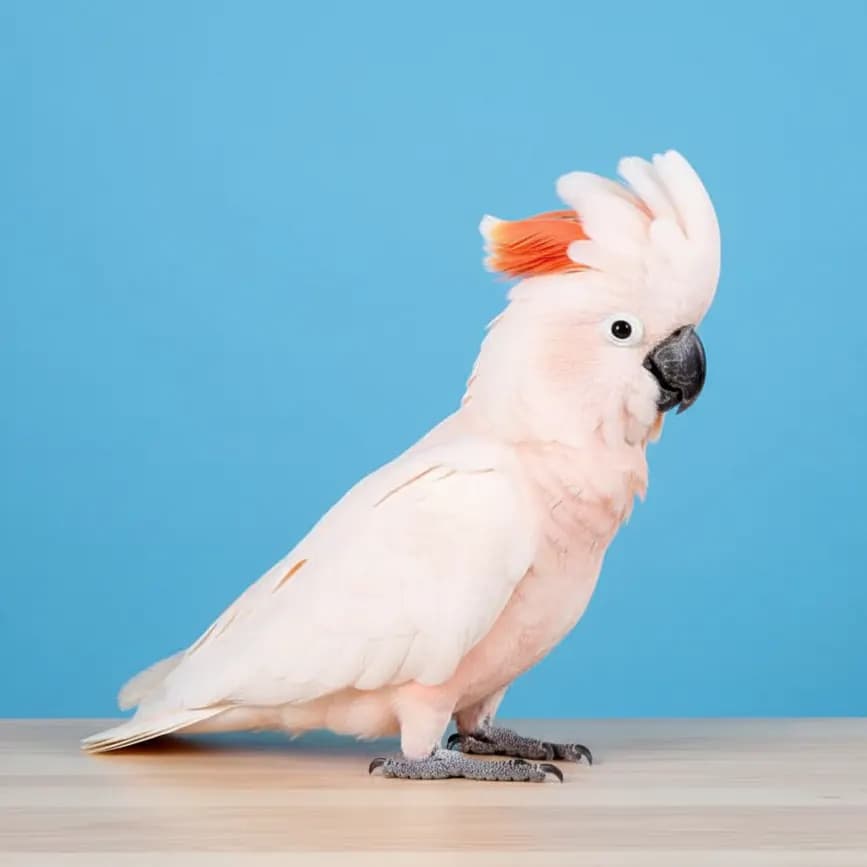
Moluccan / Salmon-Crested Cockatoo — Indonesia (CITES I).
Triton Cockatoo — New Guinea (CITES II).
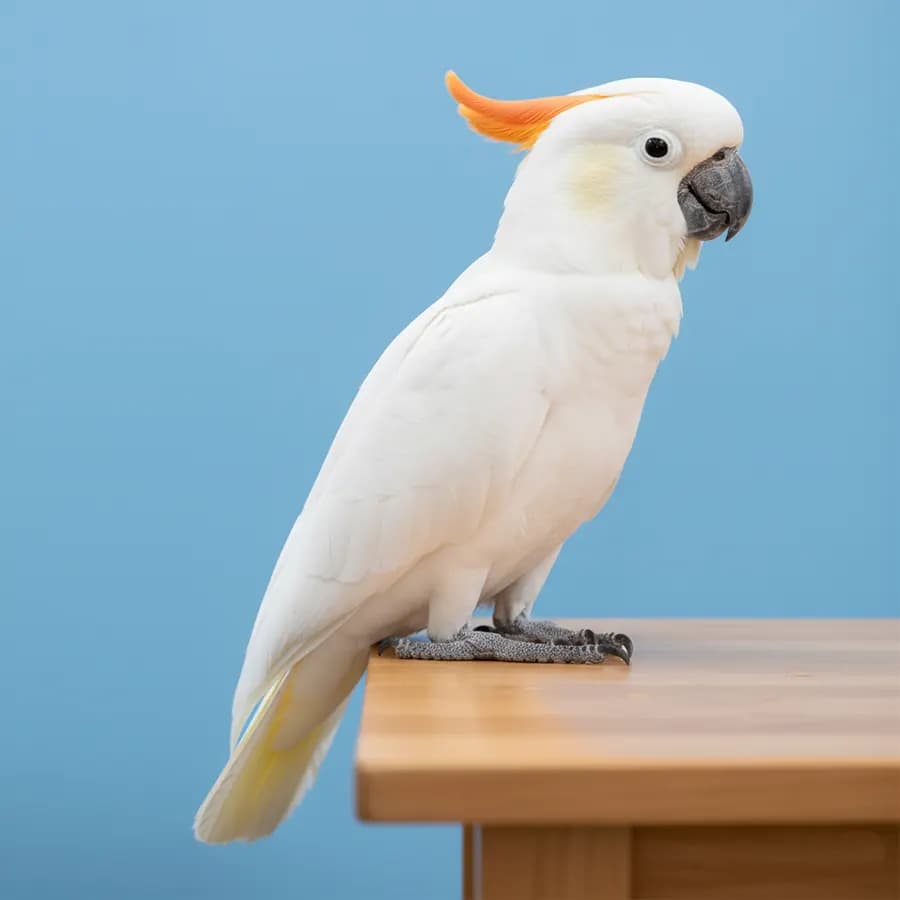
Citron-Crested Cockatoo — Sumba, Indonesia (CITES I).
Palm Cockatoo — Cape York, New Guinea, Aru Islands (CITES I).
For current population status and trade flags see [CITES species data](https://cites.org) and [BirdLife International](https://www.birdlife.org).
Lifespan, size, weight
Goffin's: 30 cm, 280–340 g, 35–45 year lifespan.
Galah: 35 cm, 270–350 g, 40–60 years.
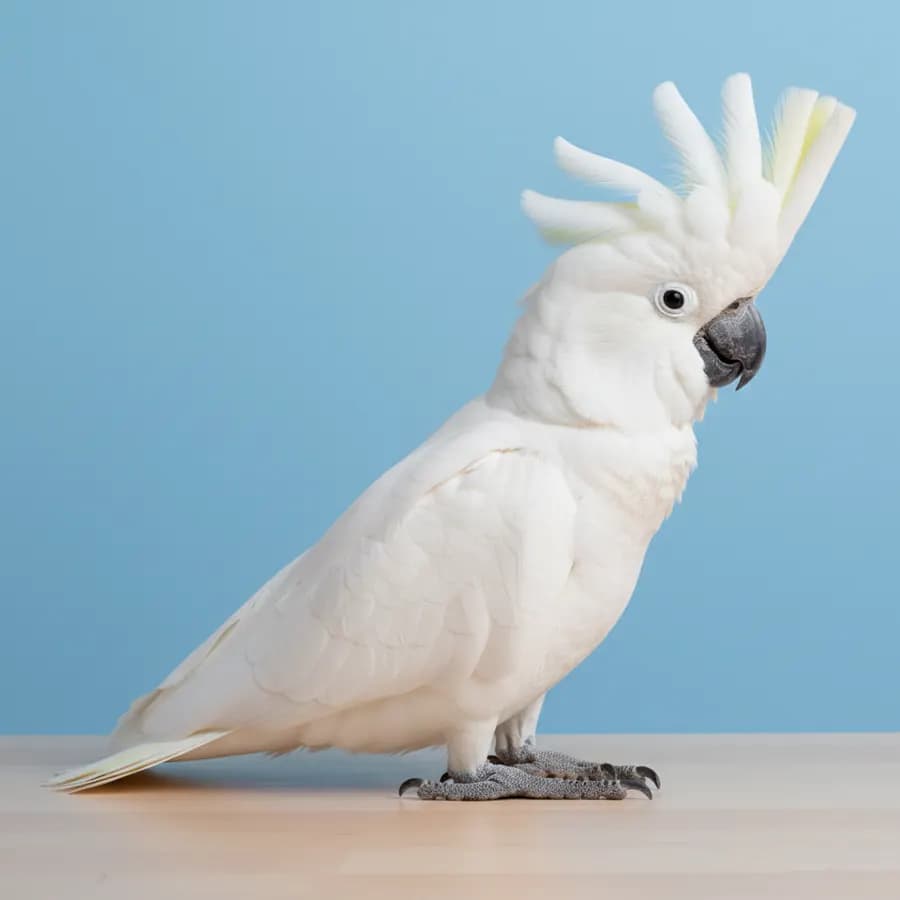
Umbrella: 45 cm, 450–700 g, 50–70 years.
Sulphur-Crested: 45–55 cm, 700–950 g, 50–70 years.
Bare-Eyed: 38 cm, 450–600 g, 40–60 years.
Major Mitchell's: 35 cm, 350–500 g, 50–80 years.
Moluccan: 50–55 cm, 850–1,000 g, 60–80 years.
Triton: 50 cm, 800–950 g, 50–70 years.
Citron-Crested: 33 cm, 350–400 g, 40–60 years.
Palm: 60 cm, 950–1,200 g, 60–90 years.
Sexual maturity is 3–6 years for smaller species and 5–8 for the largest. Hormonal behaviour intensifies sharply at this stage and is the leading reason cockatoos are surrendered.
Intelligence, talkability, vocalisation
Cockatoos are problem-solvers, tool-users, and dancers. The Goffin's is the species most studied for tool use — wild Goffin's manufacture stick tools to extract seeds. They are average talkers, with most species learning 10–40 words and clear contextual phrases.
Noise level
Goffin's: 90–105 dB.
Galah / Bare-Eyed: 85–95 dB.
Umbrella: 105–125 dB.
Sulphur-Crested: 110–125 dB.
Moluccan: 125–135 dB — the loudest companion bird in the world.
Citron / Triton / Major Mitchell's / Palm: 100–120 dB.
Moluccan and Umbrella cockatoo screams carry through villa walls in Mirdif and Al Barsha. Apartment ownership is rarely realistic. Goffin's and Galah cockatoos are the only species we suggest for apartment buyers in JLT, Marina, or Downtown — and only with strict morning/evening enrichment routines.
Diet — UAE-specific
Cockatoos gain fat fast. Wild cockatoos travel kilometres daily for food; captive cockatoos sit on a perch. Standard sunflower-heavy seed mixes cause fatty liver disease and hormonal aggression within 2–3 years.
310% sprouted legumes — mung beans, lentils, chickpeas.
45% raw nuts and seeds — strict portion control.
UAE supermarket year-round produce
Carrefour, Spinneys, Waitrose, and Union Coop reliably stock: kale, spinach, sweet potato, broccoli, capsicum, courgette, carrot, mango, papaya, pomegranate. Stick with these for cockatoos and rotate weekly.
UAE summer (May–September) protocol
Pull uneaten fresh food at 90 minutes, not at the end of the day. 40 °C ambient temperatures ferment soft food rapidly even with AC running.
Refresh water bowls twice daily; cockatoos dunk their food and contaminate water within hours.
Cuttlebone and mineral block clipped inside the cage.
Daily orange/red vegetables for Vitamin A.
Foods to avoid
Avocado, chocolate, caffeine, alcohol, onion, garlic, raw mushroom, raw potato, salt, sugar, fried food, dairy. No food prepared in PTFE non-stick cookware (toxic fumes are lethal to all parrots in minutes).
Housing in UAE climate
Cage requirements
Goffin's / Galah / Bare-Eyed: 100 cm wide x 75 cm deep x 150 cm tall, 2.5 cm bar spacing.
Umbrella / Sulphur-Crested / Triton: 120 cm wide x 90 cm deep x 180 cm tall, 3 cm bar spacing.
Moluccan / Palm: 150 cm wide x 110 cm deep x 200 cm tall, 4 cm bar spacing.
Stainless steel only. Cockatoo beaks crush chrome and zinc-plated cages and lead/zinc poisoning is fatal. Solid double-locks — cockatoos pick simple latches in seconds.
Climate setup
1Indoor temperature: 22–28 °C.
2AC airflow: never directly on the cage. Position to share the cooled room without line-of-sight to the vent.
3Humidity: 50–65%. Cockatoos suffer dust skin, beak overgrowth, and feather destruction in dry AC air. Use a cool-mist humidifier.
4Bath access: weekly mist or shallow tray. Cockatoos produce more powder-down than any parrot family — they need misting to keep feathers from breaking.
5Light: 10–12 hours light, 10–12 hours full darkness. Sleep deprivation triggers screaming and plucking.
6Balcony placement: shaded only, before 9 a.m. or after 5 p.m. Direct UAE summer sun cooks a cage interior to 50 °C in 20 minutes. Battery fan as power-cut backup.
7Air quality: zero PTFE cookware in the home, no scented candles, no aerosols, no shisha smoke.
Daily routine and enrichment
This is the make-or-break section. Cockatoos that do not get 4+ hours of human physical contact daily develop one or more of: feather plucking, self-mutilation, screaming for hours, stereotypic pacing, food refusal.
4–6 hours out of cage daily.
Minimum 2–3 hours physical contact (head scratches, shoulder time, supervised play near the family).
If you cannot commit 4 hours daily, do not buy a cockatoo. Buy a cockatiel, conure, or African Grey instead. We refuse cockatoo sales to buyers who admit they work 12-hour days with no other adult at home.
Common health issues
1Feather damaging behaviour and self-mutilation — the defining cockatoo emergency. Causes: low contact, dry air, hormonal frustration, hidden disease, sleep deprivation. Refer immediately to an avian vet.
2Psittacine Beak and Feather Disease (PBFD) — viral, often fatal. Cockatoos are the highest-risk family for PBFD. Always insist on PCR-tested birds.
3Aspergillosis — fungal lung infection from damp seed bowls in summer humidity.
4Fatty liver disease — caused by sunflower-heavy diets.
6Cloacal prolapse — chronic masturbation behaviour caused by reinforcement of nesting cues. See [Lafeber Vet](https://lafeber.com/vet/) for the protocol.
7Hormonal aggression at sexual maturity — males particularly. Often misread as "the bird turned on me" but predictable from poor handling habits.
For symptom recognition see [VCA Animal Hospitals](https://vcahospitals.com) and [Lafeber Vet](https://lafeber.com/vet/).
Where to buy in UAE
Mandatory paperwork
1CITES Appendix I or II permit — required for every species. Goffin's, Moluccan, Citron-Crested, and Palm cockatoos are Appendix I and require additional approvals through [MOCCAE](https://www.moccae.gov.ae).
3Recent avian vet certificate with PBFD/polyoma PCR.
4**Hand-raised confirmation** — fully weaned at 12–18 weeks depending on species.
5Clear breeder name and contact.
Avoid Dubizzle and Instagram listings without paperwork. Cockatoos enter the Gulf grey market through Indonesia and Pakistan; trafficking carries criminal penalties for buyers in the UAE under Federal Law No. 22 of 2016.
Hand-raised vs imported
UAE-bred cockatoos acclimatise fastest. Imports from Belgium, Czech Republic, and South Africa need 8–12 weeks of quarantine. We prioritise UAE-bred birds where available.
Price depends on age, talking ability, and tameness. Recently weaned hand-raised birds in the lower end of each band; talking adults at the upper end. Live availability is on the [Cockatoos collection page](https://dubaibirds.ae/shop-birds/cockatoos/).
Reviewed by
Reviewed by Hamza, Avian Care Lead at Dubai Birds since 2018.
Yes, with valid CITES paperwork. Goffin's, Moluccan, Citron-Crested, and Palm cockatoos are CITES Appendix I and require import permits from the UAE Ministry of Climate Change and Environment (MOCCAE). All other cockatoo species are Appendix II. Buying without paperwork is a federal offence under UAE Federal Law No. 22 of 2016.
Can I keep a cockatoo in a Dubai apartment?
Realistically only Goffin's or Galah cockatoos can fit apartment life with disciplined sleep schedules and serious enrichment. Umbrella, Sulphur-Crested, and especially Moluccan cockatoos produce 110–135 dB screams that travel through walls and will result in noise complaints. Villas in Mirdif, Al Barsha, or Sharjah are appropriate for the larger species.
Why do cockatoos pluck their feathers?
The four common causes in Dubai cockatoos are insufficient human contact, low indoor humidity (Dubai AC drops humidity to 25–35%), hormonal frustration in single-pet birds, and hidden infection. Plucking is a medical emergency — book an avian vet immediately, raise indoor humidity to 50–65%, audit your daily contact hours, and double the bird's foraging enrichment.
How much daily attention does a cockatoo really need?
Four hours of out-of-cage time per day with at least two hours of physical contact (head scratches, shoulder time, family proximity) is the baseline. Cockatoos that do not get this develop self-mutilation, screaming, and food refusal. If your household cannot commit this time, choose a cockatiel, conure, or African Grey instead.
What is the lifespan of a cockatoo?
Goffin's and Galah cockatoos live 35–60 years. Umbrella, Sulphur-Crested, and Bare-Eyed live 50–70 years. Moluccan, Major Mitchell's, and Palm cockatoos live 60–90 years. Cockatoos commonly outlive their owners — every Dubai Birds cockatoo buyer is asked to nominate a successor in case of death or relocation.
What should I feed a cockatoo in Dubai?
50% high-quality pellets (Harrison's, Tops, Roudybush, Zupreem Natural), 35% fresh vegetables (kale, sweet potato, capsicum, broccoli, courgette, carrot), 10% sprouted legumes, and only 5% raw nuts and seeds. Avoid avocado, chocolate, caffeine, onion, garlic, salt, and any food prepared in PTFE non-stick cookware. Pull uneaten fresh produce after 90 minutes in summer.
How do I handle a hormonal cockatoo?
Limit cuddling to head and neck only — never the back, wings, or tail base, which trigger nesting cues. Remove dark cavities (cardboard boxes under furniture, nesting boxes). Reduce daylight to 10 hours during hormonal peaks. Avoid soft warm food. If aggression escalates, consult an avian vet about hormone management. Most cockatoo aggression is fixable but requires strict discipline from every household member.