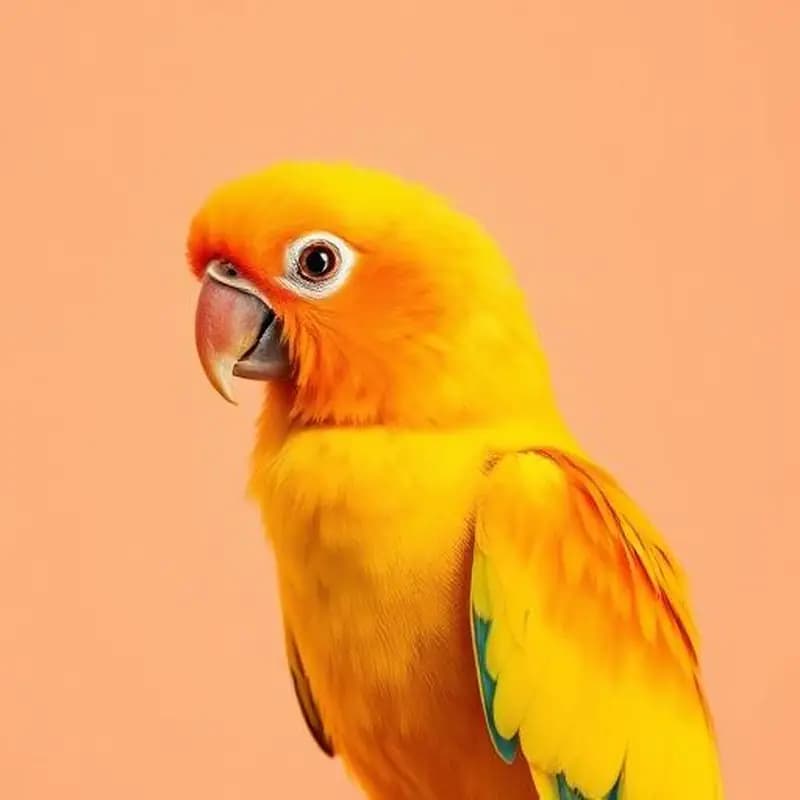
Best Birds for Beginners in the UAE

    Reviewed by Hamza, Avian Care Lead at Dubai Birds since 2018

    Six species ranked for first-time owners — by noise, heat tolerance, talkability, lifespan, and 2026 AED prices.
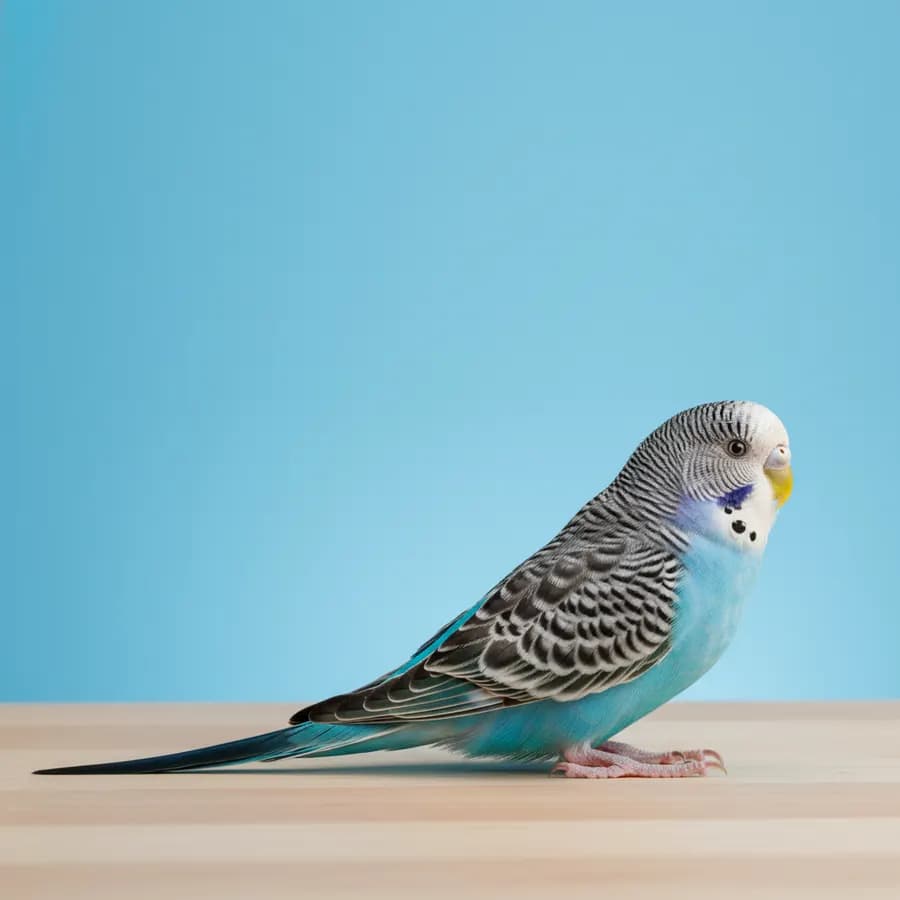
    Budgerigar — one of the best beginner birds

    _Last reviewed: April 2026_


    We sell every species on this list at our Warsan 3 aviary, and we sell all of them more often to first-time UAE owners than to experienced bird keepers. The ranking below is the order we actually recommend birds to walk-in beginners. It is not based on internet popularity or YouTube charisma. It is based on six years of watching first-time owners succeed or fail with a given species in a Dubai apartment or villa.


    If you have not yet read our [beginner's guide to bird ownership](https://dubaibirds.ae/bird-care/beginner-guide/), start there first.


    How we rank a beginner bird in the UAE


    Five criteria, weighted in this order:


    1Noise level at peak — apartment-friendly means under 90 dB at 1 metre. Anything louder triggers neighbour complaints in JLT, Marina, Downtown, and Dubai's tower-block neighbourhoods.
    2Heat tolerance — most pet parrots tolerate 22-28 degrees Celsius indoor. Some species (cockatiels, budgies, parrotlets) handle slightly wider bands. None handle a switched-off AC in August.
    3**Tameness when hand-raised** — how reliably the species accepts handling and bonds with a new owner.
    4Lifespan — short enough to be a manageable commitment for a first-time owner, long enough to build a real relationship.
    5AED price — total cost-of-ownership not just sticker price, including cage, vet, food, and emergency fund.

    Noise tolerance is the single biggest filter in the UAE because of how Dubai's towers and villa rows are built. We have rehomed more parrots over noise complaints than over any other reason.


    #1 Cockatiel — the universal first bird


    The Cockatiel (Nymphicus hollandicus) is native to the Australian outback, where flocks of 100+ travel between water holes. It is the only species in the cockatoo family considered apartment-suitable. We have placed Cockatiels in studio flats in Marina, family villas in Mirdif, and student housing in Sharjah without a single noise complaint in any of those neighbourhoods.


    Noise: 50-70 dB. Whistles, contact-calls, no scream.
    Lifespan: 18-25 years.
    Length: 30-33 cm.
    Weight: 80-120 g.
    **Talkability**: limited — males whistle melodies and pick up 5-30 words, females rarely talk.
    Heat tolerance: 22-30 degrees Celsius. Tolerates Dubai indoor heat slightly better than most parrots.
    AED price (2026): 550-1,200 AED hand-raised at Dubai Birds. Mutations like Lutino, Pearl, Cinnamon, White-faced, Bronze Fallow, and Dominant Silver in the upper band.

    Why it is beginner-friendly


    Hand-raised Cockatiels step up within minutes of meeting a calm new owner. They tolerate handling by all family members, including children over 8. They are forgiving of dietary mistakes during the first weeks (within reason — no avocado, no PTFE fumes ever). They pluck and self-mutilate at far lower rates than larger parrots.


    Downsides


    Powder down — Cockatiels produce more dander than any other small parrot. People with asthma sometimes react. Test exposure before buying.
    Hormonal egg-laying in females — single females sometimes lay infertile eggs in autumn/winter triggered by long daylight. Manageable with light reduction and calcium supplementation.
    Quiet but persistent contact calls — sunrise and sunset whistles can wake light sleepers if the cage is in the bedroom.

    Apartment fit


    Excellent. Most apartment buildings in Dubai will not register a Cockatiel acoustically.


    #2 Budgerigar (Budgie) — the cheapest legitimate entry point


    The Budgerigar (Melopsittacus undulatus) is also Australian, also flock-living, and the most-kept pet bird in the world. We do not push Budgies on every walk-in because their shorter lifespan changes the experience, but they are an honest answer to "what is the cheapest tame bird I can keep in my Dubai apartment?"


    Noise: 60-65 dB. Constant low chatter, no scream.
    Lifespan: 7-10 years (English/show Budgies shorter at 5-7).
    Length: 18 cm.
    Weight: 30-45 g.
    Talkability: surprisingly strong — top Budgies have built vocabularies of 1,700+ words (Guinness record). Most pet Budgies learn 20-100 words.
    Heat tolerance: 22-32 degrees Celsius. The most heat-tolerant pet parrot.
    AED price (2026): 150-400 AED for hand-raised, 200-600 AED for show/English Budgies.

    Why it is beginner-friendly


    Low cost, small mess, small cage footprint, talks better than most birds 50x its size, accepts apartments without complaint, sleeps through the night without dawn screaming.


    Downsides


    Short lifespan — 7-10 years is a real disadvantage if you want a long-term companion.
    Tumours and obesity — Budgies are genetically prone to abdominal tumours. Diet management matters more than people realise.
    Pair-bonded Budgies do not talk — if you buy two Budgies, they bond to each other and ignore humans. Single Budgies talk; paired Budgies do not.

    Apartment fit


    Excellent. Single or paired, no neighbour will hear them through standard walls.


    #3 Lovebird — bonded, beautiful, opinionated


    Lovebirds (Agapornis genus) are native to Africa and Madagascar. Three species dominate the UAE pet trade: Peach-faced (A. roseicollis), Fischer's (A. fischeri), and Masked (A. personatus). They are smaller than a Budgie's wingspan but louder, more confident, and more nip-prone.


    Noise: 65-80 dB. Sharp, repetitive contact calls.
    Lifespan: 15-20 years.
    Length: 13-17 cm.
    Weight: 40-60 g.
    Talkability: weak — 5-10 mumbled words at best.
    Heat tolerance: 22-30 degrees Celsius.
    AED price (2026): 250-650 AED for hand-raised in standard mutations, 600-1,200 AED for rarer colour mutations.

    Why it is beginner-friendly


    Small, vibrantly coloured, deeply bonded to one person when hand-raised. Gateway parrot for owners who will eventually want a bigger species — Lovebirds teach you about parrot body language, hormonal cycles, and territorial behaviour.


    Downsides


    Single-person bonding — a Lovebird that bonds to one adult will nip everyone else in the household, sometimes hard.
    Persistent high-pitched call — apartment-tolerable but louder than a Cockatiel and can grate during a long workday.
    Hormonal aggression — both genders. Egg-laying in females is a calcium-management challenge.
    Buy in pairs only if you are not seeking a tame pet — paired Lovebirds bond to each other and become hand-shy.

    Apartment fit


    Good. Workable in JLT/Marina/Downtown apartments, especially if there is white noise (kitchen extractor, washing machine) running during peak vocalisation periods.
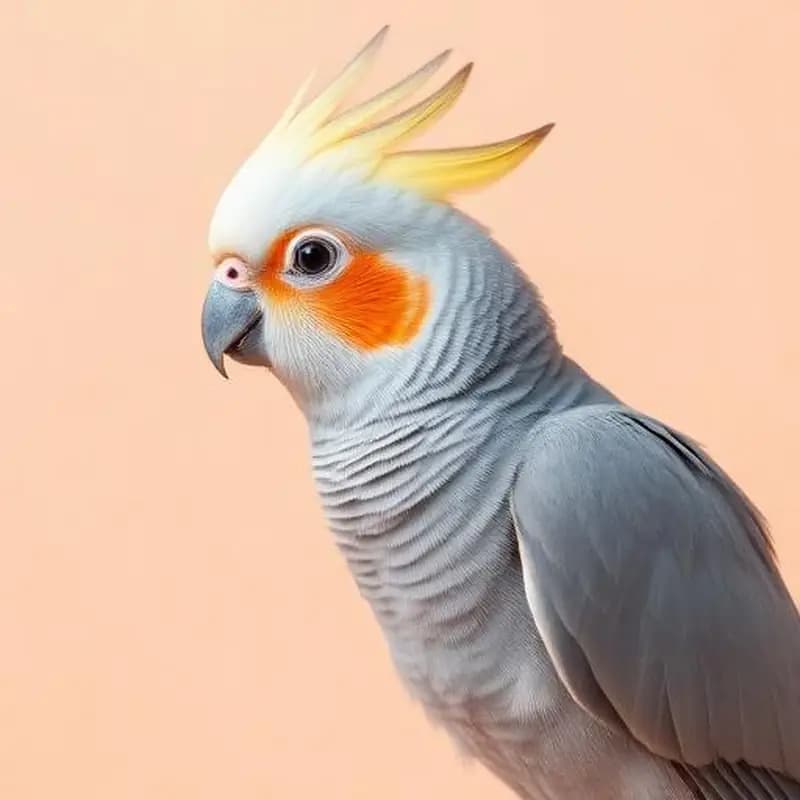

    Cockatiel

    #4 Pacific Parrotlet — big personality in 30 grams


    The Pacific Parrotlet (Forpus coelestis) is the smallest true parrot kept in the UAE. They originate in coastal Ecuador and Peru. They are sometimes nicknamed pocket parrots because they fit in a hand.


    Noise: 65-75 dB. Sharp chirps and short calls.
    Lifespan: 15-20 years.
    Length: 12-14 cm.
    Weight: 30-35 g.
    Talkability: 5-15 words for males, less for females.
    Heat tolerance: 22-30 degrees Celsius.
    AED price (2026): 600-1,500 AED for hand-raised.

    Why it is beginner-friendly


    Tiny footprint, tiny food bill, intensely affectionate when hand-raised, beautiful colour mutations including Blue, Green, Yellow, and Albino. Best for owners who want "a real parrot" but live in a 1-bedroom apartment.


    Downsides


    Tendency to nip — Parrotlets do not understand they are small. They will charge a 50 kg human if hormonal.
    Single-bird policy — Parrotlets do not tolerate other birds. Never house with another species.
    Less common than Lovebirds in the UAE — fewer breeders means waiting lists.

    Apartment fit


    Excellent.


    #5 Green Cheek Conure — the apartment-friendly cuddle bird


    The Green Cheek Conure (Pyrrhura molinae) is native to Brazil, Bolivia, Paraguay, and Argentina. The mutations Pineapple, Cinnamon, Yellow-Sided, and Turquoise are all colour variants of the wild Green Cheek and behaviourally identical. We sell more Green Cheeks than any other conure because they are the only conure realistically apartment-suitable.


    Noise: 70-85 dB. Quiet for a conure.
    Lifespan: 25-30 years.
    Length: 26 cm.
    Weight: 60-80 g.
    Talkability: weak — 5-15 words, often mumbled. Excellent at body language and contact calls.
    Heat tolerance: 22-28 degrees Celsius.
    AED price (2026): 1,000-2,500 AED depending on mutation. Pineapple and Yellow-Sided slightly above wild Green.

    Why it is beginner-friendly


    Extraordinarily affectionate, snuggle-prone, willing to be flipped onto its back in a hand. Survives apartment noise restrictions. Long enough lifespan to build a 25-year relationship without African Grey-level complexity. Read the [full conure care guide](https://dubaibirds.ae/bird-care/conure-care/) for the deep dive.


    Downsides


    Higher price ceiling — 1,000-2,500 AED versus 200-1,200 AED for the smaller species above.
    Nipping during hormonal periods — manageable with consistent training.
    25-30 year commitment — longer than a Cockatiel by half a decade.
    Burrowing under blankets and into shirts — supervise strictly because suffocation accidents happen with unsupervised burrowing.

    Apartment fit


    Good. The only conure species we recommend for apartments. Sun and Jenday Conures peak at 100-110 dB and are villa-only.


    #6 Indian Ringneck Parakeet — the talking villa bird


    The Indian Ringneck (Psittacula krameri) is native to South Asia and parts of Africa. It is one of the few medium parrots that can occasionally outclass an African Grey on clarity of speech. We list it last on this beginner ranking because the noise ceiling pushes it out of apartment use, but for villa owners it is a strong first-or-second bird.


    Noise: 80-90 dB peak. Chattery rather than scream-prone.
    Lifespan: 25-30 years.
    Length: 38-40 cm including tail.
    Weight: 130-180 g.
    Talkability: very strong — clear words from 6 months, full phrases by 18 months.
    Heat tolerance: 22-32 degrees Celsius. Best heat tolerance of any medium parrot.
    AED price (2026): 800-3,500 AED. Wild-type Green at the lower end, Blue, Lutino, Albino, and Violet mutations at the upper end.

    Why it is beginner-friendly


    Strong talker with apartment-borderline volume, long lifespan with manageable behaviour, bred extensively in the UAE so hand-raised stock is reliable. The only large-ish parrot we routinely place with first-time villa owners.


    Downsides


    "Bluffing stage" at 4-12 months — adolescent Ringnecks become temporarily nippy and fearful regardless of how well they were raised. Most owners panic and consider rehoming. The phase passes if you persist with training.
    Independent personality — Ringnecks are less cuddly than Cockatiels or Conures. They prefer to perch near you rather than on you.
    Apartment-borderline noise — at peak vocalisation a Ringneck can be heard through walls. Villa-recommended.

    Apartment fit


    Marginal. Workable in larger apartments with thick walls; risky in older Dubai/Sharjah tower blocks.


    Quick comparison table


    | Species | Noise dB | Lifespan | AED 2026 | Apartment | Talker |

    | - | - | - | - | - | - |

    | Cockatiel | 50-70 | 18-25 yr | 550-1,200 | Yes | Whistler |

    | Budgerigar | 60-65 | 7-10 yr | 150-400 | Yes | Strong |

    | Lovebird | 65-80 | 15-20 yr | 250-650 | Yes | Weak |

    | Pacific Parrotlet | 65-75 | 15-20 yr | 600-1,500 | Yes | Limited |

    | Green Cheek Conure | 70-85 | 25-30 yr | 1,000-2,500 | Yes | Weak |

    | Indian Ringneck | 80-90 | 25-30 yr | 800-3,500 | Marginal | Strong |


    Conure

    Species we do NOT recommend as a first bird in the UAE


    These are exceptional birds and we sell them every week, but not to walk-in first-timers without a plan.


    African Grey — emotionally complex, prone to plucking under Dubai's dry AC humidity. See [African Grey care guide](https://dubaibirds.ae/bird-care/african-grey-care/).
    Macaws — 100-105 dB screams, villa-only, 50-80 year commitment. See [macaw care guide](https://dubaibirds.ae/bird-care/macaw-care-guide/).
    Cockatoos (except Goffin's and Galah) — 100-135 dB, emotional bonding so intense that under-attention causes self-mutilation. See [cockatoo care guide](https://dubaibirds.ae/bird-care/cockatoo-care/).
    Sun and Jenday Conures — 100-110 dB, neighbour complaints inevitable in apartments.
    Caiques — high-energy, nippy with children, advanced bird requiring confident handling.
    Amazons — strong bite, heavy hormonal aggression at maturity.
    Eclectus — uniquely demanding diet (high Vitamin A from natural sources, strict no-pellet schools of thought), feather plucking under stress.

    Where to buy a beginner bird in the UAE


    For any species above the Budgerigar, we recommend buying from a registered seller with a physical aviary. Hand-raised, leg-banded, vet-checked birds adapt to a new home in 1-2 weeks. Imported or parent-raised birds need 4-12 weeks of acclimatisation and are not beginner-friendly under any reading of the term.


    Dubai Birds publishes live availability and pricing for all species above on the [parrots collection page](https://dubaibirds.ae/shop-birds/parrots/). The full UAE 2026 pricing reference is in our [llms.txt](https://dubaibirds.ae/llms.txt).


    For independent species references, [BirdLife International](https://www.birdlife.org) covers wild population data, [CITES](https://cites.org) provides legal trade status by species, [MOCCAE](https://www.moccae.gov.ae) is the UAE regulator, and [Lafeber Vet](https://lafeber.com/vet/) and [VCA Animal Hospitals](https://vcahospitals.com) are the avian medicine references we use most.


    Reviewed by


    Reviewed by Hamza, Avian Care Lead at Dubai Birds since 2018.


    Frequently asked questions


    See the FAQ block below.

    Frequently Asked Questions

    What is the single best bird for a complete beginner in the UAE?
    A hand-raised Cockatiel is our top recommendation. At 50-70 dB it is apartment-friendly anywhere in Dubai. It lives 18-25 years which is a meaningful but not overwhelming commitment. It bonds to one or all family members depending on how it is handled. It tolerates Dubai indoor temperatures well and rarely develops the plucking and self-mutilation issues of larger parrots. Price range in 2026 is 550-1,200 AED for hand-raised.
    Are Budgies good for first-time owners or are they too small?
    Budgerigars are excellent first birds, just with a different trade-off than Cockatiels. The lifespan is 7-10 years which is short. The bond is looser than a Cockatiel. But the price (150-400 AED), talkability (some Budgies learn 100+ words), and apartment-tolerance (60-65 dB) are unmatched at any other price point. We recommend Budgies for college students, young professionals in studios, and households who want to test bird ownership before committing to a longer-lived species.
    Can I keep a pair of Budgies or Lovebirds, or should I get just one?
    Pairs are kinder if you work long hours but the birds bond to each other and become difficult to tame. Singles bond strongly to humans and learn to talk but require daily 1-2 hours of human interaction. For first-time owners we recommend a single hand-raised bird with consistent daily contact. For owners who travel often, a pair is more humane than a single bird left alone for 12+ hours daily.
    Why is the Indian Ringneck listed last when it is such a strong talker?
    The noise ceiling. At peak vocalisation an Indian Ringneck reaches 80-90 dB which is borderline for Dubai apartment walls. We have placed Ringnecks in larger apartments with thick walls without complaints, but in newer tower blocks (post-2010 Marina, JLT) the sound carries. Ringnecks are excellent for villa owners or detached homes in Mirdif, Al Barsha, Sharjah, or Ajman. They are also strong second birds for owners who started with a Cockatiel and want to step up.
    How much does a beginner bird cost to keep per year in Dubai?
    Realistic year-one budget is 4,000-7,500 AED for a Cockatiel or Green Cheek Conure including bird, cage, food, vet, and emergency fund. Smaller (Budgie, Lovebird, Parrotlet) runs 2,500-5,000 AED. The full breakdown is in our beginner's guide at /bird-care/beginner-guide/.
    Why are African Greys, Macaws, and Cockatoos not recommended for beginners?
    Three reasons. First, noise: Macaws and most Cockatoos exceed 100 dB and are villa-only. Second, lifespan: 40-80 year commitments that frequently outlive the buyer. Third, emotional demand: African Greys, Cockatoos, and Macaws develop plucking, screaming, and self-mutilation when their needs are unmet, and a first-time owner rarely meets those needs in year one. We sell all three every week but only after a buyer has read our species-specific care guide and discussed the realities with our team in person.
    Which beginner bird talks the best?
    The Budgerigar, surprisingly, has the highest verifiable vocabulary among the beginner species — top Budgies have crossed 1,700 words. The Indian Ringneck talks more clearly with 25-100 words and full phrases. Cockatiels whistle melodies and pick up 5-30 words but rarely speak in clear human speech. Lovebirds, Parrotlets, and Green Cheek Conures are weak talkers — buy them for personality, not vocabulary.
    Are any of these species illegal to import or own in the UAE?
    No. All six species on this list are legally kept in the UAE with appropriate paperwork. Cockatiels and Budgerigars are not CITES-listed. Lovebirds, Pacific Parrotlets, Green Cheek Conures, and Indian Ringnecks are CITES Appendix II — paperwork accompanies the bird from a registered seller. Always verify the closed leg-band and ask for the import paperwork at any reputable seller. Buying without paperwork exposes the buyer to confiscation under MOCCAE regulations.
    What is the absolute cheapest legitimate bird I can buy in Dubai?
    A hand-raised Budgerigar at 150-200 AED from a registered seller. We caution against buying Budgies for under 100 AED from souk vendors or Dubizzle resellers — these birds are typically not hand-raised, often unweaned, and frequently carry undiagnosed disease. The savings disappear at the first vet visit.
    Can children handle these birds safely?
    Cockatiels and Budgerigars are the most child-tolerant species on this list. Both can be handled by supervised children over 8 with confidence. Lovebirds and Parrotlets nip and are recommended for older children only. Green Cheek Conures vary individually; many are gentle, some nip during hormonal periods. Indian Ringnecks during the bluffing stage (4-12 months) should not be handled by children. Always supervise any child-bird interaction regardless of species.